Thursday, October 17, 2013

Bad Manners = Bad Drivers

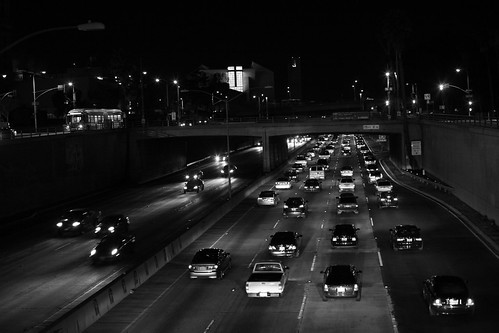
Homeward Bad manners equal bad drivers. The phenomenon of bad driving can’t be explained with that simple equation, but lack of courtesy is certainly one of the factors that contribute to making driving a car so frustrating and, often, infuriating. Scope of awareness is another factor. The scope of human awareness ranges from none, through only aware of oneself, to awareness of oneself and his/her family, to awareness of other people around us, and on up to complete awareness of our surrounding environment on all levels. There are some drivers who are very close to the bottom of that range, acting as if they are the only one on the road. Distraction is becoming more and more a major factor, not only behind the wheel of the car, but in many other areas of human interaction. As more people seek information and communication through hand-held electronic devices, distraction is increasingly creating chaos on the roads and on the sidewalks. Distraction effects awareness. The less aware one is, the more dangerous they are behind the wheel of a automobile. Distraction, in addition to electronic communication devices, can come from anything one is doing in addition to driving the car. When you are driving, that is all you should be doing. You have only fractions of a second to react to an almost infinite variety of hazards you may encounter. Undistracted, full awareness of the task at hand is what you should strive for when you drive. You are surrounded by discourteous, barely aware, distracted drivers. To survive you need ever advantage you can give yourself. In addition, there are some unwritten rules of the road, which you should know. Some of the rules are, or have been, practiced in other places. Some may well be unique to Southern California where I travel. Before I was old enough to drive, I heard about the St. Louis rolling stop. I had an aunt who lived in St. Louis and on a visit to her from our home in Peoria, Illinois, I remember hearing my parents discuss the rolling stop. They believed that it was unique to that city. Perhaps it was in the early 60s, but I doubt it. In California the rolling stop is alive and well, and the rule, as practiced, is that if there is no traffic, vehicle or pedestrian, at an intersection regulated by stop signs, you don’t need to stop. Or even slow down very much. Some drivers who get into the habit of applying this rule will often practice it even when there is traffic in the intersection. It is my firm belief that these drivers consider what they are doing and where they are going to be more important that anything anyone else might be doing and are thus entitled to the right-of-way, either that or they are just oblivious to everyone else on the planet. Recently, a new rule has come into fashion. Simply stated, it is: You may park anywhere you want to if you turn on your emergency flashers. Anywhere really does mean anywhere. I’ve seen this rule applied to double parking on a very narrow and quite busy street. It, apparently, applies to any situation where it might be even momentarily inconvenient for the driver to properly park his/her car. The way this works in practice is as follows. If you feel you need to get out of your car for some reason and there isn’t anywhere right where you are to get your vehicle out of street then you simply activate your emergency flashers and go about your business. How to get around the traffic hazard you just created is not your problem and you don’t need to be concerned about it. I believe that some drivers actually feel that they are entitled to stop their vehicle wherever they please as long as they turn on their emergency flashers, and if you object by honking or gesturing rudely they look either surprised or indignant that you would challenge their right to do so. Another rule: Turn signals are optional, or possibly obsolete. I’ve seen this rule applied in other places, but it is very broadly followed in Los Angeles, especially by the Los Angeles Police Department. In practice, this rule may be caused by one of the driver’s hands being required to steer the car while the remaining hand does various other tasks, such as texting; holding the cell phone to the ear; applying make-up; gesturing; holding a book, newspaper, coffee cup, sandwich, energy drink, cigarette or hairbrush; adjusting the sound system or on-board video player; and/or whatever other activity the driver might consider essential. In the case of the LAPD, perhaps they just don’t want anyone to know what they are going to do next. Of course there are always those people who don’t actually know what they are going to do next and, thus, all turns are done as an impulsive or entirely random act. Here is one to watch out for. The rule seems to be: When turning from a side street into traffic, always wait until you can see the oncoming driver’s eye color before pulling out in front of him. I see this every day. Just when you think that the driver who wants to pull out will wait until you have passed safely by, they pull out in front of you. They look at you and then they wait and wait. It’s as if they wanted to test your reaction time. Perhaps they do. This is a rule for the pedestrians in the group: If a driver pretends not to see the pedestrian, he doesn’t have to stop. Here is how this works. You are standing on the corner waiting for the light to change. There are cars waiting to turn onto the street you want to cross. When the light changes, cars can turn in front of you as long as the drivers have not made eye contact with you or you have not stepped off of the curb. Even stepping off the curb into the crosswalk is no guarantee that a car or two won’t clip your toes before someone admits to seeing you. Eye contact is essential for a pedestrian. Glaring eye contact is even better. If you can simulate a good, intimidating, “You better not!!” glare, you will be more likely to live to step up onto the opposite curb. This may well be my favorite. If, as you reach an intersection, not matter how busy it might be, and realize that you are in the left lane, but need to turn right, other drivers are required to yield to you as you cut across all lanes to make your turn. There is a related rule to this one, and that is: If you are pulling out of a gas station or restaurant driveway that is within a dozen feet of an intersection and need to turn left, you are entitled to cut across all lanes of traffic in order to make your turn. I believe the simple computation for this rule is that you should never have to live with a mistake where you would be required to turn around and try again. And finally, the most annoying rule of all: When turning around, always chose the narrowest part of the busiest street possible so that the maximum amount of cars are required to wait while you perform your maneuver. It is even better if one of more of the other vehicles have to back up to allow space for the completion of your turn. Never pull into a driveway and wait for traffic to clear when you need to turn around. Always strive for maximum inconvenience for the maximum number of other drivers. For the courteous, aware and undistracted drivers, I recommend that you always allow extra time to reach your destination. Driving is fun. Sit back and wait until the chaos resolves and then proceed with caution. Defensive driving isn’t just a catchy phrase thought up by the highway safety bureaucrats. No, it’s a lifestyle, an attitude. The Boy Scouts have it right with their motto: Be Prepared. Arm yourself with the knowledge that everyone out there on the road is crazy except you. If you drive that way, you’ll be more likely to survive your journey unscathed.

Friday, July 19, 2013

My Summer Vacation 2013

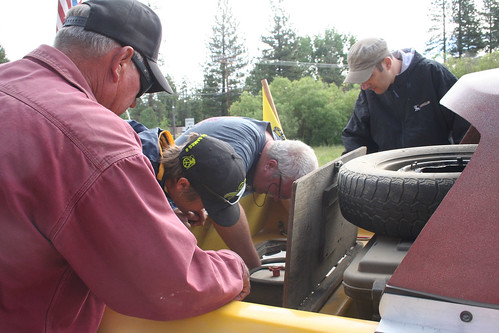
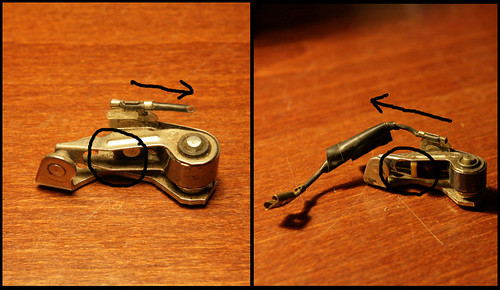
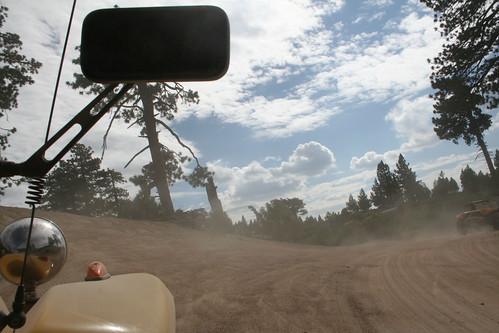
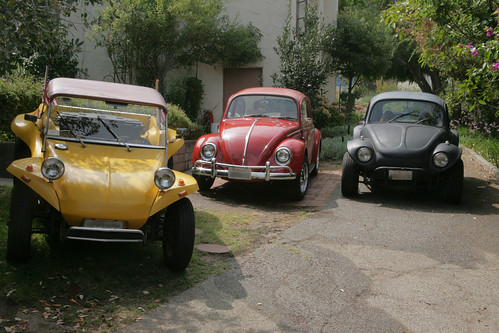
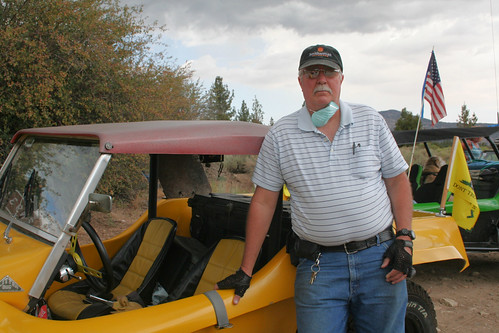
A Man and His Car This year, as we have for the past 12 years, Carol and I loaded up the dune buggy with all our camping gear and made the drive to Big Bear Lake for the annual Manx Club Big Bear Bash. This year was a record-setting rally for the club with 166 buggies in attendance. There were five groups of cars that went off-road and one group that stayed on the street. The weather was perfect and there was only one car that I know of that had to be towed back from our off-road adventures. As I said, this was our 13th year in a row at the Big Bear rally and up until this year we'd only had one minor mechanical problem. And that one minor problem was when our muffler fell off at the beginning of a Saturday run several years ago. That was no big deal, since all I did was stop, run back and grab the hot muffler, throw it into the car and we were back on the road again. This year was different. This year, our Saturday run was flawless. We had a great day of bumping around the back roads, driving along through the dust and through the forests and up into some really spectacular views. On Sunday when we set out we were in the middle of the pack of 40 some cars for a quick run up into the mountains and then back to camp. Just as we left the highway and were headed to the dirt, my car just stopped running. I coasted through the turn and off into a convenient wide shoulder along the road. As we sat there, most of the cars behind us in the pack went on by us and up the road towards the mountains. Due to the abruptness of the failure, I guessed that some part of the engine electrical system had failed. There was no way to tell exactly what had broken, fallen off, or whatever without looking, so I climbed out of the seat and walked around to the back of the car to see if I could figure it out. I opened the little hatch that gives me access to the engine and looked inside -- there was nothing obviously missing or loose on the engine. Maybe something had failed due to dust or corrosion. I re-seated all the wires that run the engine and tried to start the car. Nothing. Okay, no loose wires, dashboard lights are all working, it's got to be something inside the distributor. I popped the distributor cap and there it was. The ignition points had broken somehow. Repairs By now, a couple of the cars behind us had stopped to see if they could help. I had started to unscrew the hold-down screw for the points with the multi-tool I always carry on my belt when someone put a real screwdriver into my hand. I looked up and said, "Thanks," and continued working. When I got the point set out of the distributor the problem was easy to see. The tiny, fiber cam-follower has broken off -- first time that ever happened to me. I had a spare set of points in the tool kit I carry in the car, so I dug them out. When I tried to fit them into place, I discovered that, though the spare point set would fit and function, the wire that connected them to the condenser was attached going the wrong direction and wouldn't reach the connection in this distributor. No problem. I cut the wire on the broken set off right at where it was attached to the point set. Then I cut the wire on the spare set at right at the connector. I used my teeth to strip some insulation off each of the wires, twisted the two ends together and wrapped the connection with tape. Now I had a working set of replacement points. It was just a matter of re-installing them into the distributor. Points Easier said than done. Working on a VW distributor is best done with it out of the car and on your work bench. It's easy that way. Working on it in the car is a entirely different level of difficulty. After trying a number of different methods of getting the point set and it's tiny screw into the distributor lined up in such a way that they could be attached correctly, I finally managed to get it done (you have to stand on one foot and tilt your head, hold your mouth a certain way and you can do it). I set the point gap visually, tightened down the screw and walked around to the front of the car. When I turned the key, the engine started right up and idled nicely. I closed up the hatch, re-positioned the spare tire and strapped it down. I climbed back into the car and we were off to catch up to the rest of the group and continue our morning adventure. On the Trail I later apologized to the group for making them wait. What I didn't say was that I thought I did a pretty good job of getting my car back on the road quickly. Doesn't matter. The folks who stopped to help knew how well the repairs went. More importantly, the car got fixed so I could load my camping gear back on it and go home without the expensive aid of a tow truck. In my view, it was another perfect year, our thirteenth consecutive Big Bear Bash. What is life but a series of problems and their solutions? Without an obstacle now and then, life would be rather boring, wouldn't it?

Tuesday, June 11, 2013

The Little Red Car Motors On

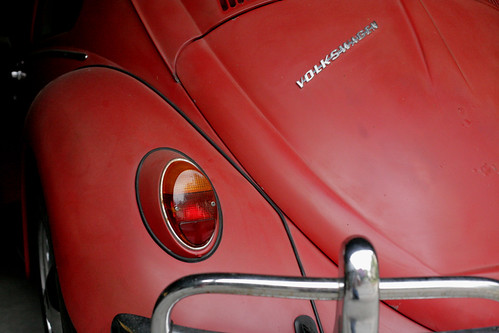
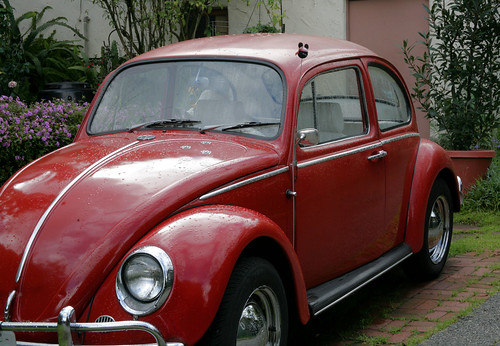
LR In our last episode, we left the little red car sitting in the driveway airing itself out after the carburetor needle valve had failed and allowed the engine to fill up with raw gasoline. I called ahead to my BCE, the VW parts store that I’ve been patronizing for the last 29 years, to make sure they had the parts I needed. They did. I drove one of my other cars up there to pick them up. On the way back, I stopped at big chain parts store and picked up three quarts of oil. With the needed parts in hand, the problem was easily fixed. I threaded the spark plugs back into the cylinder heads, replaced the crankcase drain plug, and dumped in the three quarts of oil. To replace the needle and seat and the float was simply an matter of removing the four screws that hold the top of the carburetor in place and lifting it off. I removed the defective needle and seat and replace it with the new set. For good measure, I also replaced the float. I put the top back on the carburetor, screwed it down and climbed into the driver’s seat. I turned the ignition on with the key and let the electric fuel pump run for a minute to fill up the carburetor float chamber. When I engaged the starter, the engine fired right up and ran just fine except that it wouldn’t idle. That was an easy problem to figure out. The bad needle valve had been letting fuel into the carburetor all the time and thus was affecting the idle speed. Without that excess fuel, I needed to readjust the idle screws so that the engine was getting the correct amount of fuel to idle. Once that adjustment was done, the car ran beautifully and has been working fine ever since. For the future, to prevent this from happening again, I am going to install a fuel shut-off valve in the engine compartment so that, if I ever have to park the car nose-up on a hill, I can shut off the fuel. Every motorcycle I have ever owned had a fuel shut-off valve. In solving this problem, I realized why. On a motor cycle, the fuel tank is above the engine and, thus, the fuel can easily fill up the engine if there is a leak. This is only a problem on carbureted engines. Fuel injected engines have other potential problems, but flooding due to bad carburetor needle valves isn’t one of them. Another lesson learned. Another problem solved. The moral of this story is: If it has moving parts, eventually one or all of them will wear out and fail.

Sunday, May 26, 2013

The Curse of the Little Red Car

Airing Out the Engine
Once again, my ’65 VW Beetle has developed a problem.

I’ve been having some sewer pipe work done at my house which has made the driveway inaccessible. I needed to move a car out of the driveway just in case I needed one. With three cars to choose from, I figured that the ’65 Beetle with its locking engine compartment would be the hardest to steal. I moved it out into the neighbor’s driveway where it was only occasionally blocked by all the construction equipment. I used it a couple of times during the week and it ran and drove just fine.

On Friday, my neighbor needed to get his own car out of his driveway, so I moved the Beetle out onto the street. We live on a rather steep hill. Since the gas tank was full, I parked the car nose uphill in the morning so the gas wouldn’t leak out of the tank. In the afternoon of that same day, I went out to start it up and head off to a meeting. I turned the key in the ignition and only got a “click.” I thought, “Okay, the battery has gone dead. I’ll deal with that after I get back home.” I fired up the dune buggy and backed out of the driveway over the top of the wooden and metal covers on the three holes where the repair guys had been working earlier in the day. That was fine and I made it to my appointment only a few minutes late.

When I returned home, I went out to Beetle to see if I could figure out exactly what was wrong with it. When I tried to start it, I still only got this “click.” It sounded very similar to the sound I’d heard before when the battery didn’t have enough charge left to turn the starter. It wasn’t exactly the same sound though and the dashboard lights didn’t really indicate to me that the battery was dead. Still, I gave it the benefit of the doubt and took the battery out and put in on the charger in the basement.

A few hours later, the battery was showing that it now had a fair amount of charge available. Certainly enough to get the car started so that I could move it off the street. I put the battery back into the car and hooked it up. Still just a “click.” Okay, maybe something is locked up and I can bump the engine by popping the clutch with the transaxle in reverse and get it turning. I let it roll back a bit and engaged the clutch. Wham! A dead stop. I tried it again. Same result. Okay, the engine won’t turn over at all. The problem was now increased in magnitude from the simple dead battery to a possible seized engine. I still need to get it off of the street, though I was beginning to be less concerned about someone stealing it. In fact, I had momentary thoughts of encouraging someone to take it away and put me out of its misery. Instead, I let it roll down the hill and got it partly into the driveway. With our driveway, first you have to go up the driveway before you can go down. With the help of some very kind passers-by, we got it into the driveway and down to where it wasn’t going to be in the way. I left it there for the night.

The next morning, when I went out to see what was wrong, I had the benefit of several hours of pushing all the evidence around in my mind. As I approached the car I could smell a strong odor of raw gasoline. With the fact that it had started and run just fine when I backed it out onto the street and parked it; and the fact that the starter couldn’t make the engine turn; plus the fact that bumping the engine by popping the clutch hadn’t worked; I suspected that the engine was filled with gasoline – all of the engine including the manifold, the cylinders and the crankcase. I opened up the engine compartment and, indeed, there was gasoline dripping out of the bottom of the carburetor. It was full of gasoline all the way up the bottom of the carburetor. I didn’t have time to do anything about it at that point so I just moved it farther down the driveway where it would sit more level and left it there.

Today, after the car sat for a day in a level spot, there was no more gasoline dripping out of the bottom of the carburetor. So, on the level, there was no more fuel running into the engine. I pulled the oil dipstick. The crankcase was full to the top. I grabbed a drain pan from the basement, put it under the car, loosened the drain plug and watched the result. First, the nice clean, thick oil drained into the pan, it was immediately followed by about a half a gallon of gasoline. My diagnosis was confirmed. While I let the gasoline drain out of the crankcase, I removed the spark plugs. They were all soaked in fuel. I turned on the ignition switch to activate the electric fuel pump and peered into carburetor. Gas was entering the carburetor and the float valve inside was not shutting off the flow when the float chamber was full. In a nose-up position, gravity was causing the fuel to continually run into the engine. Problem identified.

I’m left the spark plugs out and the crankcase drain plug out so the engine will dry out a bit before I go any further. The next step will be repairing the carburetor, putting new oil in the engine, putting the spark plugs back in and starting the engine. At that point I’ll probably be able to tell if there is any other damage. I’m hoping that there are not bent piston rods or valve stems. I did rotate the engine by hand and it seems okay. I’ll have to wait a couple of days for the parts stores to open before I can get parts and continue the repair before I’ll know for sure. I wouldn’t be at all surprised if the engine has severe damage. That would be just typical of how things have gone ever since I bought this car.

I’m beginning to believe that this car is cursed. Maybe I need an exorcist.

Friday, May 10, 2013

High Maintenance

The Fleet
Up until recently, I hadn’t been doing too much driving, once a week, perhaps, at the most, and even then I would drive our Mitsubishi Galant. I’d been writing, working on finishing a book and starting another. No need to go anywhere by car when your job is at home.

A few of weeks ago, a friend called me and made me an offer I couldn’t refuse. He needed some help renovating a building he had purchased and I agreed to help. It was an interesting project and I knew I would like doing the work. The only thing I didn’t find attractive about the job was the twenty-three mile commute each way on the Los Angeles freeways. It takes at least an hour to drive that distance and you don’t go twenty-three miles an hour, instead you go seventy miles an hour and then you stop and then you creep along like an inch worm and then you go fifty miles an hour and then you stop and then it’s back to inching along. It’s a frustrating way to travel and it’s very hard on your car. It proved especially hard on my old Volkswagens.

The first day was a federal holiday so traffic was light and the drive took about thirty minutes. Every day after that it took at least an hour, usually longer. That first day, I drove the ’65 Beetle, the little red car. That was fine and it ran well. By the end of that week, the weather warmed up and I thought I decided to drive the dune buggy. I went to start it and the battery was dead. Not dead like you leave the lights on and the battery is dead. No, dead like this was the battery that got fried when the alternator on the ’65 shorted out and started pumping huge amounts of voltage into this battery to the point where the acid began to boil and blow the caps off the battery. That kind of dead. Dead as in time to buy a new battery. So I did, a nice Sears Diehard. The car started right up.

I did the commute for about a week in the dune buggy. It was a Thursday, I think, when the brakes failed. On the freeway. In stop and go traffic. Fun. You can operate the car by not following anyone too closely, using the gears to slow the car down, downshifting and using the engine as a brake, and using the emergency brake when you have to actually come to a complete stop. You can do it, but it isn’t easy. Or safe. Or fun. I made it home. Okay, I thought, I have two other cars that I can drive, so no problem. Then, when I was driving the ’65 Beetle to run an errand, I noticed that the clutch pedal was sticking. This is a bad sign. Okay, I can still drive the Baja bug.

The Baja bug was drivable, but only barely. When I built it, I equipped it with dual carburetors because I thought that with the 1,776 cc motor, the duals would give me lots of power. They did indeed, but they also dumped enormous amounts of excess fuel into the engine, fouling the spark plugs and causing the engine to misfire and backfire through the carburetors. When it ran right, it was great fun to drive. Most of the time, though, it ran rough, backfired, and required me to drive very carefully so as not to foul the spark plugs. It did run, though, and it was all I had to drive at that point, so I drove it. And then I got stuck in traffic. The freeway was completely stopped ahead of me. I was able to exit just before the stoppage. I know my way around Los Angeles so I decided to go through town to get home. The Baja bug, in its current configuration was not the ideal car for driving across the city during rush hour. It sputtered and coughed and lurched its way through Beverly Hills traffic. It never stopped, but it was a driving experience I didn’t every with to repeat. Something had to be done. It was time to solve all these car problems before I had nothing to drive and was forced to give up this job opportunity because I just couldn’t get there from here.

I took at day and a half off from work and began the process of getting all the cars back in shape. I began by consulting my friends a BCE, the parts store I’ve been depending upon for the last twenty-five years. We came up with a way to make the Baja bug drivable. I’d replace the dual carburetors with a big single barrel. I ordered the parts and they promised to have them by the afternoon of the next day. I drove home to begin diagnosing the problems with the other two cars.

I started with the dune buggy. After I adjusted the brakes, I discovered that the brake master cylinder was leaking. I would need to replace it to get the brakes working again. Next I took apart the clutch linkage on the ’65 Beetle. The front end of the cable was worn paper thin and needed to be replaced. The actuating lever on the pedal was also damaged and needed to be replaced. I recalled an article I had read on the internet about an innovative solution to a long-term VW clutch problem and searched around the web until I found the part that had been highlighted in the article. I like what I saw and the reviews were one hundred percent positive, so I ordered the part.

The company is called Unique Parts and it appeared to be a one-man operation. When I placed the order I made the required Pay-Pal transfer and figured, since it was a Friday, I’d receive the part sometime the next week. I didn’t receive any shipping information that day, so I guessed I’d hear something by Monday. If not I’d follow up and see when I could expect it. The part actually arrived via U.S. Mail the very next day, Saturday. Amazing. Impressive.

My Friday wasn’t over yet, though. I called BCE and learned that they had received all the parts I needed for the Baja bug. I drove over, picked them up, drove back home and began the conversion process. It took the entire rest of the day to finish the project. I checked everything over twice to make sure I’d gotten the new carburetor installed correctly. It seemed to be perfect. I got behind the wheel and keyed the started. It took a while for the fuel pump to fill the new carburetor with gasoline, but once it did, the engine started right up. I took it out for a test drive and it worked very well. The engine was idling a bit too fast, but once I adjusted it down I was satisfied. I almost had a drivable car. The only thing it needed to be perfect was a stereo. I picked one up at Best Buy, found a speaker box at Pep Boys and hooked it up. Now I had one car ready for commuting.

Next step was to repair the clutch cable on the ’65 Beetle. I did that over the course of a few evenings after I got back from the jobsite on the other side of town, an hour at a time. The new clutch linkage installed easily. Not only did it give the cable to actuator lever connection a superior method of operation, but it moved the clutch pedal three-fourths of an inch to the left, making the car much easier to drive. Once I got everything put back in place, I took it out for a drive. The clutch action is smoother and easier. I am confident that it will also be longer lasting. Now, I had two cars up and running.

Since I was making a bit of extra money on this job, I decided that it was time to put and interior into the Baja bug. Up until now, it has just been bare metal inside. From the beginning of the Baja bug project, I had wanted to put rubber mats on the floor instead of carpet. Rubber mats in a Volkswagen is very “old school.” I ordered some, along with sound insulation for the floor and a carpet kit for the back. The carpet kit is designed to fit a car with the back seat removed, which is how I have it set up. I put the rubber mats in and they looked great. To make the carpet kit for the rear of the car work right, I had to make a wooden floor where the back seat would normally mount. Once I did that, the carpet get went in nicely with just a little glue.

Next project was to get the brakes working on the dune buggy. I replaced the master cylinder, bled the air out of the brake lines and tested the brakes. They worked just fine. Three cars running, again.

Sure, my old VWs are high-maintenance, but I like working on them. It is very satisfying to be driving a car that I built and repaired myself and have it work so well. After all the work I’ve done on all the cars, when something goes wrong, I usually know right away what it is and how to fix it. There is nothing arcane or mysterious about malfunctions of cars you’ve built from the ground up. I know every inch of them, I know when they don’t sound right, or feel right. They’re fun to drive and they’re all different. Plus, you meet some very interesting people when you drive vintage VWs. I often get stopped in parking lots and gas stations by people who want to talk about the Volkswagens they used to own. Most people wish they still had theirs. I’m happy to share stories with them and don’t mind being envied for still having mine.

Thursday, February 9, 2012

The Little Red Car is Alive!!

It Lives


In our last episode, which took place eleven months ago, the Little Red Car’s engine had finally given up and I had ordered a rebuilt 1600cc, dual port to replace it. It took about six weeks to get the rebuilt motor. My friends at Bob Costa Enterprises supplied the core for the rebuild since I didn’t want to use the one I had. The engine block that came with the car when I bought it must have been from a late model fuel injected car since it had no provision for a mechanical fuel pump to be mounted in the block. That was just another one of those little things about this car that has had me shaking my head continually since I bought it. Wherever the engine originally came from, I didn’t want to base a rebuilt engine on that block, so instead we used an earlier block.

In 1965, this car had been equipped with a 1200cc engine, single port intake and a small single barrel carburetor. The electrical system was probably 6 volt; it was powered by a generator. The 1.2 liter engine produced 40 horsepower.

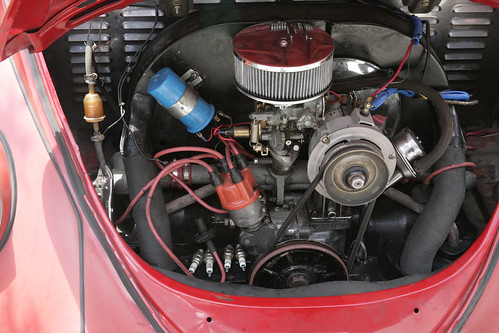
When I got the car, it had a late model engine of unknown size, probably 1600cc. The single barrel carburetor is from the early 70’s. The electrical system was 12 volt and powered by an alternator. The alternator first appeared on Beetles in about 1974. I don’t know what transaxle I got, except that it was worn out and had to be replaced.

The newly rebuilt engine sat in my basement for some weeks until I was ready to remove the seized engine and replace it. It’s a moderately large undertaking to swap out an engine. It’s not all that difficult, but there are many things that have to be done to make it happen. First you’ve got to remove the old engine from the car. That involves disconnecting the accelerator cable, the heater box cables, the fuel line and the four electrical connections (ignition coil, battery, generator idiot light, oil pressure idiot light). I chose to remove most of the stuff attached to the top of the engine as well, which includes the alternator, the alternator tower, the fan shroud, the carburetor and manifold, and the distributor. You don’t have to remove all that stuff, but it’s easier the get the engine out from under the car if you do. Oh, yeah, to get the fan shroud off, you have to remove the engine compartment cover. On most cars you’d all that part the trunk lid, but since the VW engine is in the back of the car, it’s not really a trunk.

Once you’ve got all the stuff removed from the engine it’s relatively easy to remove it. There are four bolts at the front of the engine, two on top and two on the bottom. You loosen up the nuts on those and then thing almost comes out on its own. Actually, to get the engine out you have to raise the rear of the car and support it on jack-stands. Then you put a floor jack under the engine, raise the saddle up under it, pull the engine backwards off of the attaching bolts and the transaxle spline and then gently lower it to the floor. Once you have the engine out, you can remove all the rest of the parts that you will be transferring to the new engine.

The part of this whole process that I enjoy the most is assembling the new engine. What I got back from the rebuilder was the engine block with the cylinders and cylinder heads attached, plus all the important stuff inside like pistons, piston rods, crankshaft, bearings, camshaft, valve lifters, valves and springs – all the stuff that bangs around inside the engine as a result of the burning fuel. To that you have to add the stuff that feeds, ignites, electrifies, and cools. There’s a fan and some sheet metal that directs the cooling air to where it needs to go. There’s the distributor and the ignition wires and the coil that sets the fuel on fire at the proper time. There’s the carburetor and manifold that takes the liquid fuel, mixes it with the proper amount of air and feeds that mixture into the engine. And there’s the alternator that makes electricity to charge the battery, run the radio and produce the spark that burns the fuel that makes the stuff inside bang around which, ideally, provides power to move the car forward.

Putting the thing back together and getting the engine back into the car is fairly straightforward. The hard part is lining up the engine with the transaxle and getting the engine to slide into place. Sometimes it’s easy, sometimes it isn’t. This time is wasn’t, but after much grunting, swearing, resting, giving up, taking a break, trying again, swearing, resting, trying, etc., I finally got the thing put back together. At that point I’d had enough. I left the car where it was, there in the carport, and ignored it for about eight months.

About a month ago, I had some friends help me push it up the driveway to a spot near the back door where I could work on it without driving my neighbor crazy. I set the ignition timing, charged the battery, added some oil and started it up. With a few little tweaks, it ran just fine. It still does.

Since then, I’ve fixed the shifter, adjusted the clutch and drived it around town some. It works just fine. With the Little Red Car back up and running, my only problem is deciding which of my three VWs I want to drive. I’m keeping Carol in the Mitsubishi since it has heat, a/c, automatic transmission and a great stereo. I think she’s had enough adventures in my old VWs to last her a lifetime. I like driving the old VWs, but I think it’s probably an acquired taste. Most people like a few more amenities and a lot more comfort.

Friday, March 25, 2011

The Little Red Car: The Final Conflict

The Little Red Car

It was inevitable, I suppose, but I wasn’t expecting it. I thought I’d repaired everything there was that could go wrong on this car. I replaced the transaxle, the fuel pump, the distributor, the ignition coil, the brake master cylinder, , the accelerator pedal, the shift lever, the emergency brake lever, the heater control cables, the carburetor, the alternator, the tires, the front axle torsion bars, even the radio. What else could possibly go wrong with this car? The only component left, really, was the engine and that seemed to be ticking along just fine. Sure it had always had a strange rattling sound when it was running, but the sound never changed. It was the same sound every time you fired up the engine. It always sounded as if something were loose inside the crankcase, but the sound never got louder or softer. It was always the same . . . until the other day when it wasn’t.

I was out in the back yard messing around in the garden, or working on the Baja Bug, I don’t remember which, when Carol came out to start up the Red Car and head off somewhere. I said goodbye, have a safe trip as she passed. I heard the car door slam and then I heard the starter try and fail to turn the engine over. Okay, I thought, that’s not so good. Carol abandoned the Red Car and took another of our vehicles for her journey. I went on about whatever I was doing – adjusting valves on the Baja Bug, now that I think about it. I was guessing that it was a dead battery that was the cause of the Red Car’s failure to start, so, later that day, I ran an extension cord out the back door and hooked up the battery charger to the Red Car’s battery. I left it to charge overnight and figured I’d do the diagnosis the next morning.

The next day I went out to check on the status of the battery. It appeared to be all charged up, so I unhooked the charger, put it away, then rolled up the extension cord and hung it back up in the basement. I moved the Baja Bug out of its spot behind the basement door so I could put the Red Car there for testing, and then went over to the Red Car, adjusted the seat so that I could get behind the wheel, climbed in and put the key in the ignition. When I turned the key, I heard the very same sound that I had heard the day before. The starter engaged the flywheel and then failed to turn the engine. Well, then, that would seem to be Symptom Number 1 in the diagnosis. I released the parking brake but left the car in gear and then climbed back out and tried to rock the car a bit to break things loose. It wouldn’t rock and it certainly wouldn’t roll. Here we had Symptom Number 2 in the diagnosis. I was now suspecting that the engine has seized. I went back into the basement to get a big adjustable wrench to try to turn the engine over by hand. I was able to move the engine backwards and then forward a bit. I set the wrench aside, climbed back into the car and this time was able to get it started. It seemed to be running just fine and that rattling noise was still there and unchanged. I backed the car up into the space behind the basement door, set the brake, and climbed out, leaving the engine running. One thing I noticed immediately was that the belt that drives the alternator and the fan was shaking quite violently. Other than that, and the ever-present rattle, there was no obvious indication of any other problem. I shut off the engine.

What would cause that belt to shake like that? Well, perhaps one of the pulleys was wobbling a bit. No, that didn’t seem to be the case. I took off the drive belt so I could see if there was some sort of wobble in the crankshaft pulley. As I pulled and pushed on that pulley on the end of the crankshaft I could feel and hear the crankshaft moving back and forth inside the case. Diagnosis: crankshaft bearings are worn out causing excessive heat which, in turn, caused the engine to seize.

Decision time. I had gotten the thing started and it seemed to be running just fine. Do I send Carol off driving around, knowing that at some point the engine will again seize, leaving her stranded somewhere. Do I take the chance of a catastrophic failure of the engine thereby ruining the engine case and whatever else might be in the way when parts start flying around? The answers seem rather self-evident to me. I should leave the car right where it is and order a new engine. That seemed to be the most optimum thing to do at that point, so that’s what I did. It’s in the perfect spot for me to work on right now. It’s not in the way of any other projects. So, the poor dead thing can just sit there and wait until the rebuilt engine is done and I have time to make the swap.

It does leave us to wonder, Carol and I, if this car is worth all the trouble it has caused us. Just when we think we’ve replaced everything that can break, something like this happens. Once the engine has been replaced, though, there really isn’t any part of the running gear that hasn’t been brought up to standards. Still, cars have moving parts which wear out, and this is a 1965 VW we’re talking about, so inevitably sometime in the future something else will fail on this car. I have to maintain a rather philosophical attitude about this car; otherwise I’d be tempted to have the thing hauled off to the junk yard and crushed in order to keep anyone else from having to go through what we’ve gone through with it.